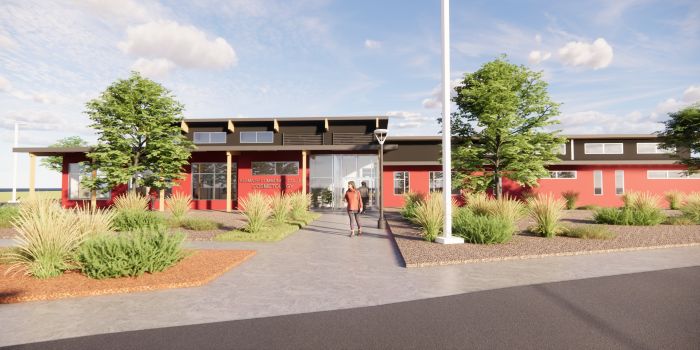
What We Learned from a Klamath Community College Project Carbon Study
In our previous article, we explored embodied carbon and why it is becoming an increasingly important consideration in sustainable building design. But how does embodied carbon analysis work in practice? And what kinds of insights can it provide during the design process?
As part of BBT Architects’ participation in Energy Trust of Oregon’s Net Zero Emerging Leaders Internship program, architecture student Devon Lizza conducted an exploratory embodied carbon analysis using the Klamath Community College Cosmetology Building project as a case study.
The goal wasn’t to find a single “correct” design solution. Instead, the study helped us better understand how emerging analysis tools can support project teams in evaluating design options and making more informed decisions.
From Theory to Practice
Much of the conversation around embodied carbon focuses on broad industry trends and large-scale environmental goals. While those conversations are important, project teams ultimately make decisions one building at a time.
To explore how embodied carbon analysis could support those decisions, Devon evaluated several structural and material scenarios for the Klamath Community College Cosmetology Building using life cycle assessment tools and carbon analysis software. The study focused on one simple question: How do different material choices influence a building’s embodied carbon footprint?
Exploring Different Structural Approaches
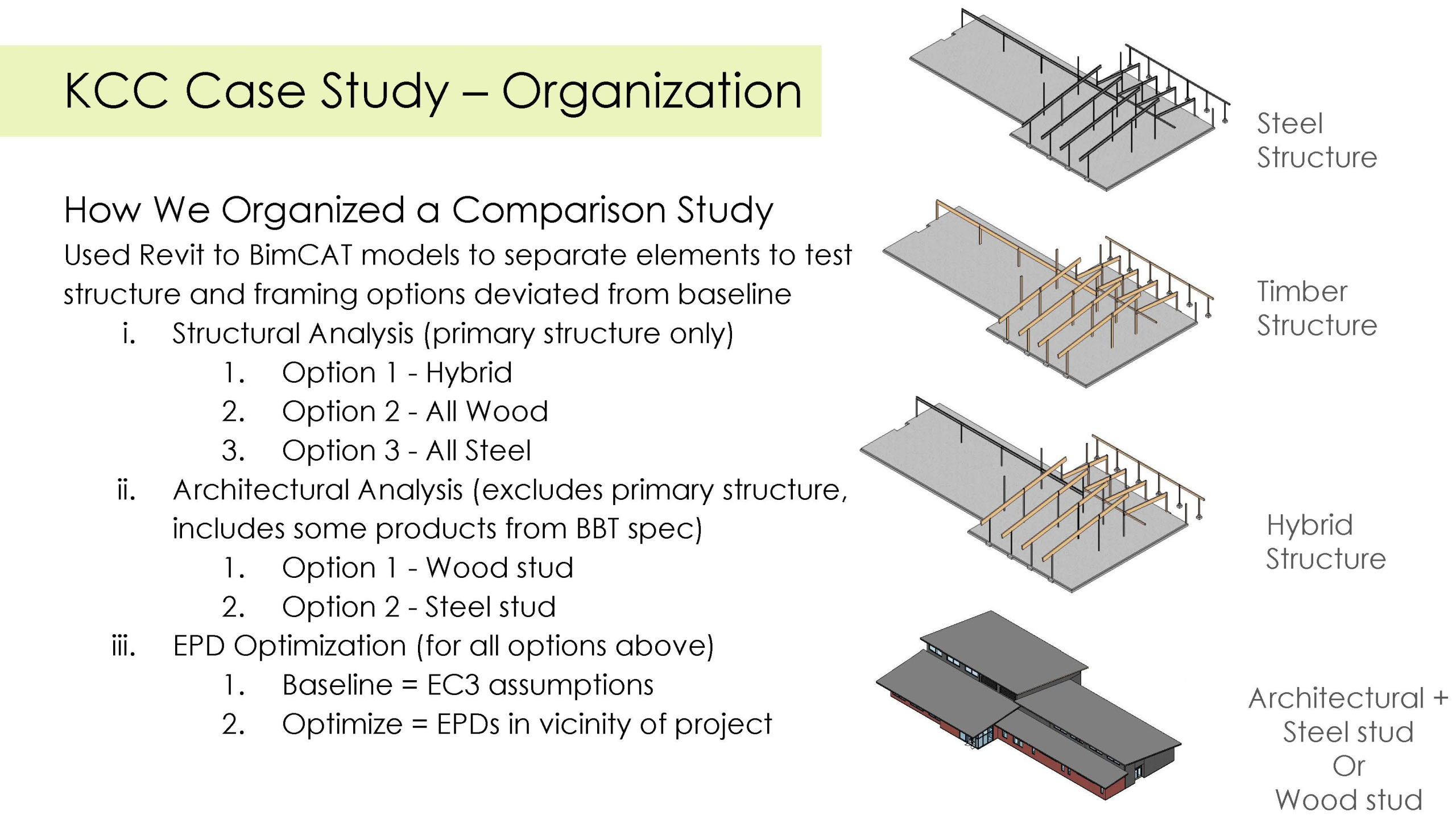 The analysis compared three primary structural approaches:
- Timber structure
- Steel structure
- Hybrid timber and steel structure
Additional comparisons evaluated alternative framing approaches and material selections within the building envelope and architectural systems. Rather than examining operational energy use, the study focused on embodied carbon—the emissions associated with extracting, manufacturing, transporting, and installing building materials. By comparing multiple scenarios, the team was able to evaluate how material choices influenced overall project impacts.
What We Learned
While every project is unique, several clear themes emerged from the analysis.
1. Material Choices Matter
The study confirmed that material selection can significantly influence a project’s embodied carbon footprint. Among the structural systems evaluated, timber generally demonstrated lower embodied carbon impacts than comparable steel systems. This finding aligns with broader industry research and reinforces the importance of considering environmental impacts alongside structural performance, cost, durability, and constructability.
2. Small Decisions Add Up
One of the most valuable insights from the study was that embodied carbon is rarely driven by a single decision. Instead, a project’s overall impact is shaped by hundreds of choices made throughout planning and design. Changes that may seem relatively minor when viewed individually can create meaningful differences when applied across an entire building. That reality highlights the value of evaluating options early, when project teams have the greatest flexibility to influence outcomes.
3. Concrete Deserves Attention
Perhaps the most surprising finding was not related to timber or steel at all. Across every scenario evaluated, concrete represented one of the largest contributors to embodied carbon. While structural systems often receive significant attention in sustainability discussions, the study reinforced the importance of examining the entire building rather than focusing on a single material or component. For many projects, opportunities to reduce environmental impacts may be found in places teams don’t initially expect.
4. Whole-Building Thinking Matters
The study also demonstrated the importance of evaluating buildings as interconnected systems. A material that performs well in one category may create tradeoffs in another. Structural performance, cost, durability, constructability, maintenance requirements, operational efficiency, and environmental impacts all influence the overall success of a project. Embodied carbon analysis doesn’t eliminate those tradeoffs—it helps project teams better understand them.
5. Better Information Leads to Better Decisions
One of the most encouraging aspects of the study was how accessible these tools have become. Resources that once required extensive expertise or specialized software are increasingly available to architects, engineers, contractors, manufacturers, and owners. That accessibility allows sustainability conversations to become more data-informed and collaborative. Rather than relying on assumptions, project teams can evaluate alternatives, compare impacts, and understand the implications of different design choices earlier in the process. For owners, that means sustainability decisions can be considered alongside the same factors that influence every successful project: budget, schedule, performance, resilience, and long-term value.
What This Means for Clients
The most important takeaway from this study isn’t that one material is always better than another. Every project has unique goals, constraints, and priorities. The real value lies in understanding options.
As analysis tools continue to evolve, project teams have greater ability to evaluate alternatives, identify opportunities, and make decisions based on measurable information rather than assumptions alone. That knowledge helps support more productive conversations between owners, designers, engineers, and contractors—and ultimately leads to better-informed project outcomes.
Looking Ahead
The Klamath Community College study was never intended to produce definitive answers. It was intended to help BBT better understand emerging tools, test new workflows, and explore how embodied carbon analysis can support project decision-making.
What we learned reinforced something we already believed: sustainability is most effective when it is integrated into the design process rather than treated as a separate objective.
As we continue implementing our Sustainability Action Plan and advancing our AIA 2030 Commitment, we will continue exploring new tools and methodologies that help us deliver practical, high-performing, and sustainable solutions for our clients. Because ultimately, sustainability isn’t about achieving a single metric. It’s about giving project teams the information they need to make better decisions.
________________________________________
Related Articles
• Sustainability in Action: How an Energy Trust Internship Strengthened BBT’s Sustainability Practice
• Sustainability in Action Part 2: What Is Embodied Carbon?