How an Energy Trust internship helped BBT strengthen our sustainability practice and advance our AIA 2030 Commitment
At BBT Architects, we believe sustainability is most effective when it is integrated into the decisions that shape building performance, occupant experience, resilience, and long-term value. That’s why we signed onto the AIA 2030 Commitment and developed a Sustainability Action Plan focused on continuous learning, measurable outcomes, and practical application.
But commitments alone don’t create change. Progress requires investment—in people, knowledge, tools, and processes that help translate sustainability goals into better project outcomes.
This article is the first in a series exploring how BBT is putting those commitments into action.
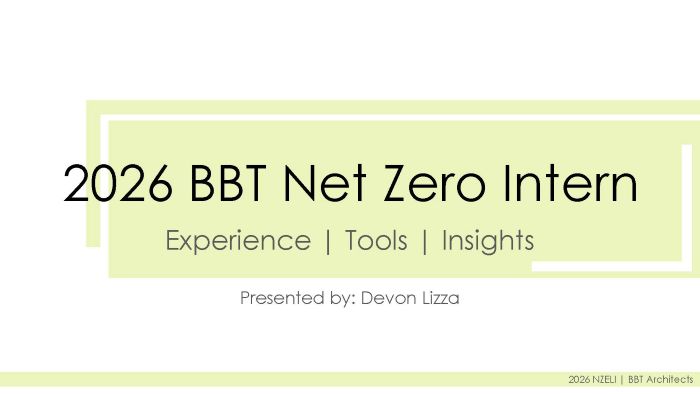
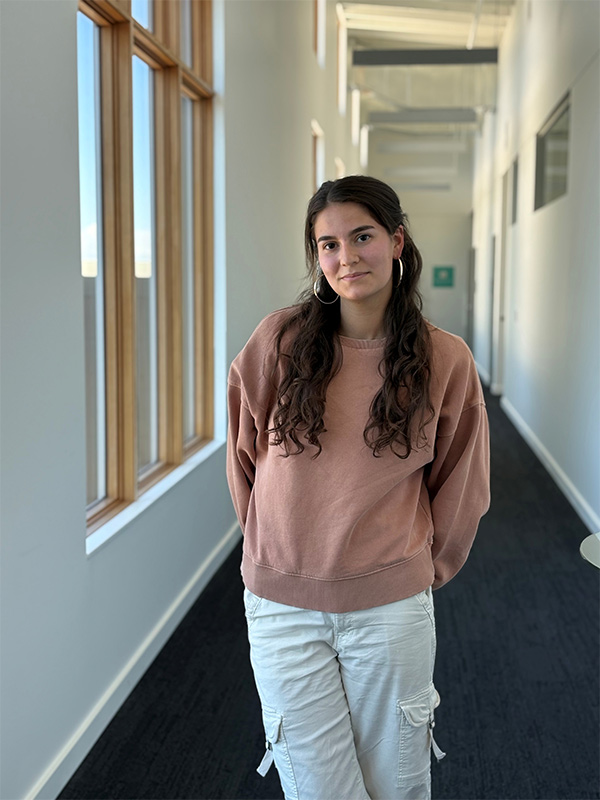
One recent example came through our participation in Energy Trust of Oregon’s Net Zero Emerging Leaders Internship program, which enabled us to host University of Oregon architecture student Devon Lizza for a focused sustainability research internship. Through her work, BBT strengthened our internal sustainability capabilities, expanded our understanding of emerging analysis tools, and gained valuable insights that will benefit our clients and project teams.
 A Partnership for Learning
Energy Trust of Oregon’s Net Zero Emerging Leaders Internship program supports firms that have made formal sustainability commitments, including the AIA 2030 Commitment. The program is designed to help participating firms advance sustainability initiatives while creating meaningful opportunities for emerging design professionals.
For BBT, the internship created an opportunity to pursue research and process development that can be difficult to prioritize amid the demands of day-to-day project work. “As a firm committed to improving our sustainability practices, understanding emerging tools and processes is critical,” says Nathan Leigh, BBT’s Sustainability Lead. “The internship allowed us to dedicate focused time to exploring new approaches while building knowledge that will strengthen our practice long after the internship has ended.”
For Devon, whose academic interests include sustainability, mass timber, and life cycle analysis, the internship offered an opportunity to connect classroom learning with real-world applications. “I wanted to better understand how sustainability practices can be integrated into actual projects,” Devon explained. “The internship gave me the chance to work with real project data, explore emerging tools, and see how design decisions influence building performance and environmental impact.”
Building the Foundation
One of Devon’s primary responsibilities was supporting BBT’s first year of reporting under the AIA 2030 Commitment. The AIA 2030 Commitment challenges architecture firms to track and reduce the energy use and carbon impacts of the buildings they design. Achieving those goals begins with collecting, organizing, and understanding project performance data.
Working closely with Nathan and project teams throughout the firm, Devon helped develop data collection workflows, coordinated project information, and supported reporting through the AIA Design Data Exchange (DDx) platform. While much of this work happened behind the scenes, it established an important foundation for BBT’s ongoing sustainability efforts.
The reporting process reinforced a simple but important principle: what gets measured gets managed. By collecting and analyzing project data, we can better understand trends, identify opportunities for improvement, and track progress toward our sustainability goals. Just as importantly, the process helps us better understand how design decisions affect building performance and occupant outcomes—insights that ultimately benefit our clients.
Expanding Our Understanding of Sustainable Design
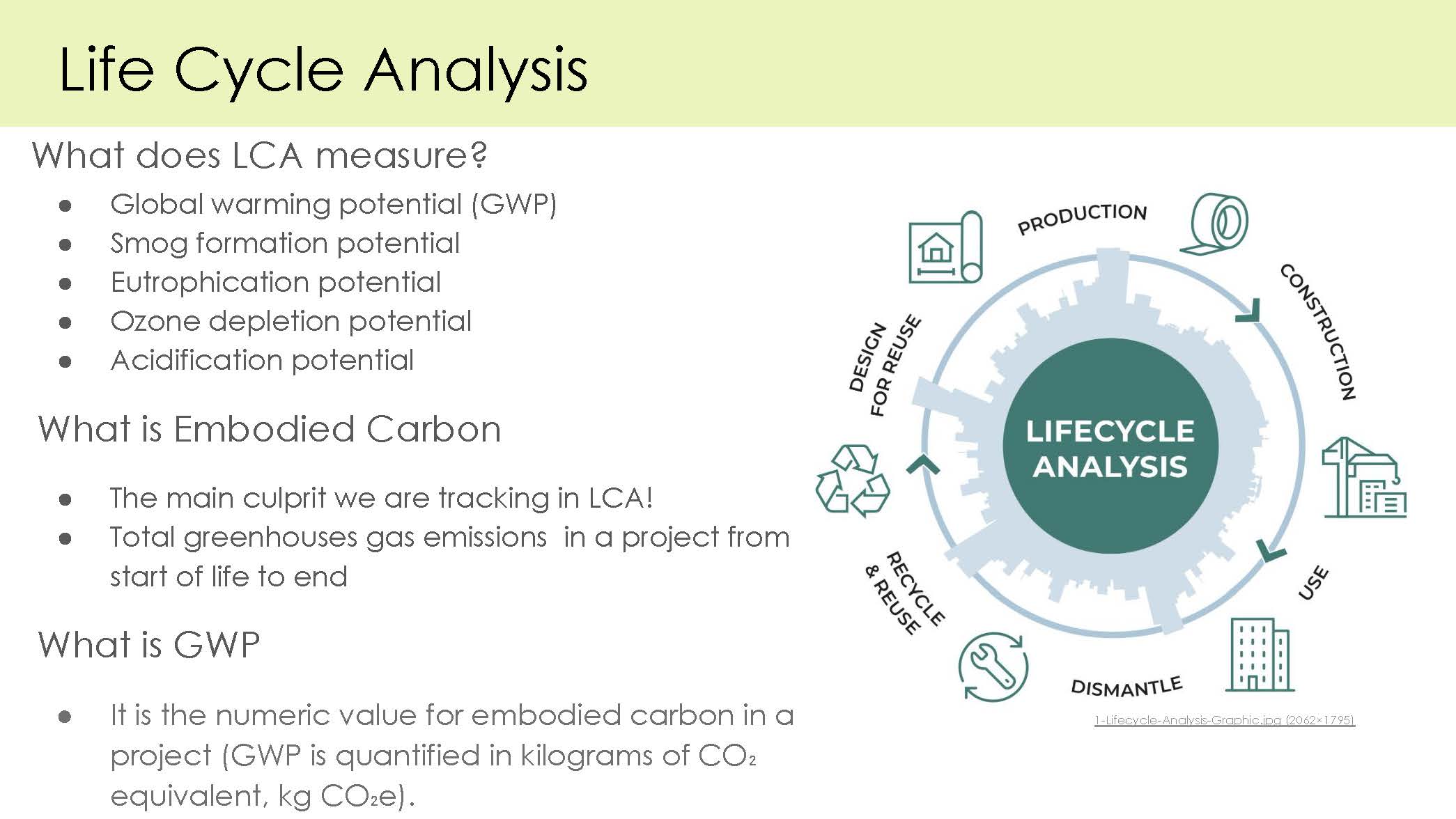 In addition to supporting AIA 2030 reporting, Devon spent the internship researching emerging approaches to evaluating embodied carbon, the greenhouse gas emissions associated with manufacturing, transporting, and installing building materials. Historically, sustainability discussions have focused primarily on operational energy use. Increasingly, however, designers, owners, and policymakers are recognizing the importance of understanding a building’s environmental impacts throughout its entire lifecycle.
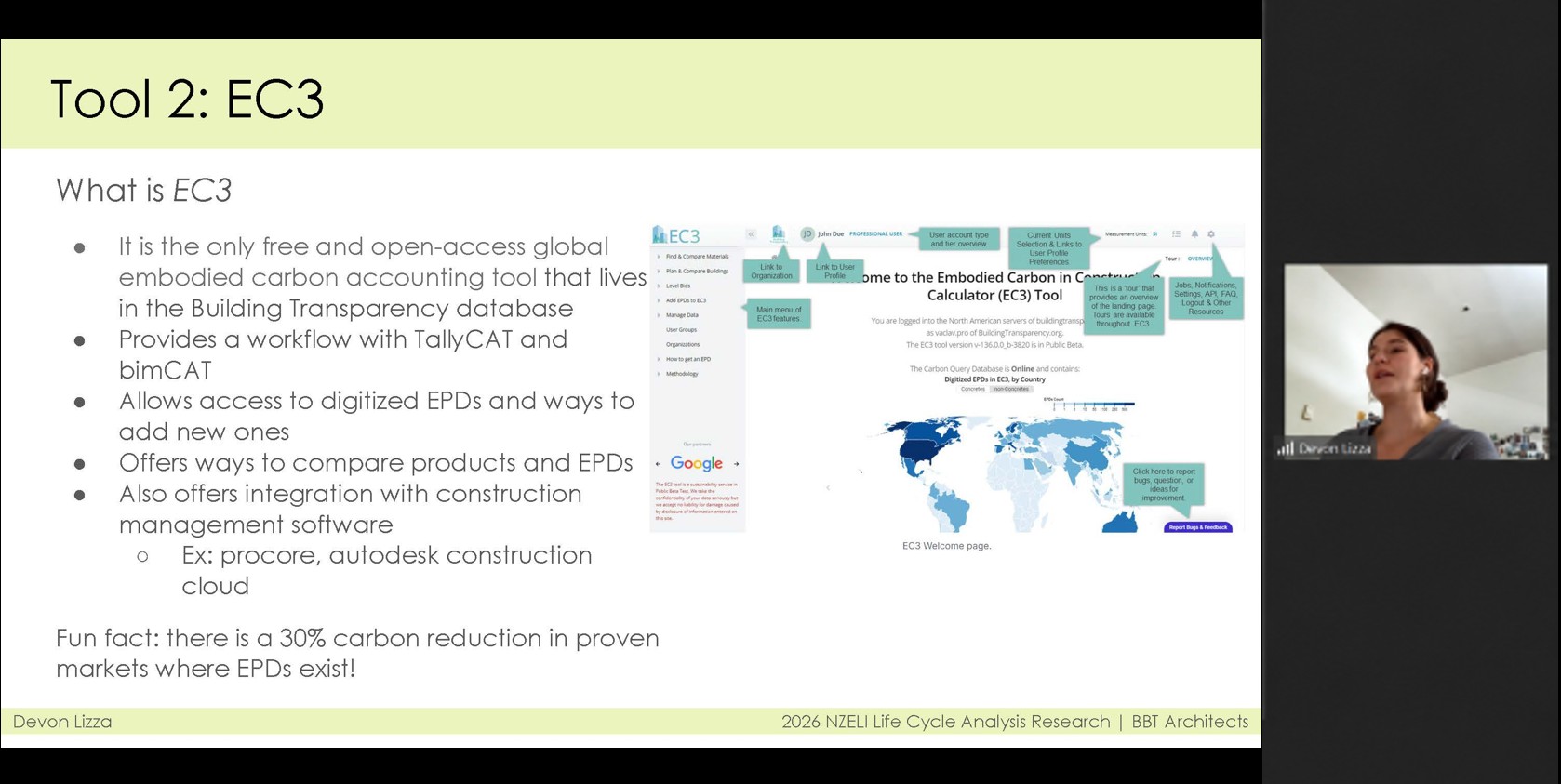
To better understand this evolving area of practice, Devon explored several open-source life cycle analysis tools and tested their application on an active BBT project. The work provided valuable insights into how project teams can evaluate different material options, understand their impacts, and make more informed decisions throughout the design process. In future articles, we’ll take a deeper look at embodied carbon, the tools Devon evaluated, and what we learned through a case study of the Klamath Community College Cosmetology Building project.
Turning Knowledge Into Better Outcomes
 Perhaps the most valuable outcome of the internship wasn’t a specific report, analysis, or software tool. It was the opportunity to build knowledge and share it across our firm.
At the conclusion of her internship, Devon presented her research and findings to BBT staff, helping project teams better understand emerging sustainability tools and how they can be incorporated into future work. The experience reinforced one of the central ideas behind BBT’s Sustainability Action Plan: meaningful progress happens through continuous learning, collaboration, and the willingness to test new ideas.
“Our clients are looking for buildings that perform well, support their users, and make responsible use of resources,” says Managing Partner Kourtney Strong. “Investments like this help us have more informed conversations about how sustainability can support those goals while creating long-term value.”
Looking Ahead
The Energy Trust internship was more than a summer research project. It was an opportunity to strengthen BBT’s sustainability practice, advance our AIA 2030 commitment, and expand our ability to support clients seeking practical, high-performing, and environmentally responsible design solutions.
We’re grateful to Devon for her curiosity, initiative, and contributions, and to Energy Trust of Oregon for creating opportunities that help emerging professionals and design firms advance sustainability together.
As we continue implementing our Sustainability Action Plan, we remain focused on a simple idea: sustainability is most effective when it helps people make better decisions.
In the next article in this series, we’ll explore one of the key topics Devon researched during her internship: embodied carbon, why it matters, and what building owners should know about its growing role in sustainable design.