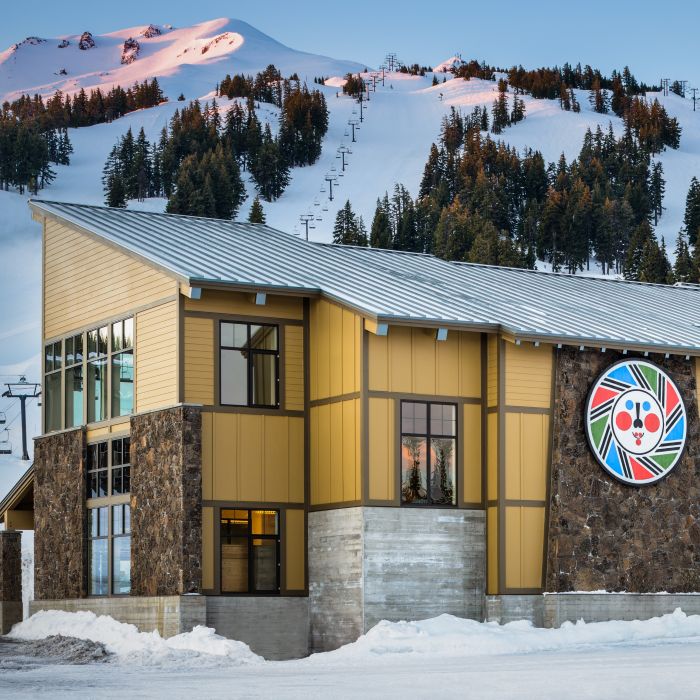
Throughout 2026, BBT Architects is proud to celebrate 50 years of practice rooted in service to communities across Oregon. This anniversary year offers an opportunity to reflect on the people, partnerships, and projects that have shaped our firm—and to look ahead to the conversations and collaborations still to come.
Over the coming months, we’ll share stories from BBT’s past and present, highlighting the individuals who built our culture, the work that defines our legacy, and the values that continue to guide our future.
BBT Architects & Mt. Bachelor
In Central Oregon, Mt. Bachelor is more than a skyline presence. It is ritual and rhythm. First snow. Closing day. Bluebird mornings. Summer rides. For decades, it has shaped how this region gathers, recreates, and defines itself.
For BBT Architects, the relationship with Mt. Bachelor spans nearly four decades — a long-term partnership that began in the firm’s early years and evolved alongside the mountain itself.
The Early Years: Establishing a Presence
BBT’s work at Mt. Bachelor dates back to 1976, when the firm completed the Main Lodge Addition. At the time, the resort was growing, and infrastructure needed to expand to meet demand.
Over the following years, BBT continued contributing to key guest-facing facilities, including the Pine Marten Lodge (1988) and the West Village Ski Shop (1992). These projects helped shape the experience skiers and visitors would come to know as quintessentially “Bachelor” — warm interiors against dramatic alpine conditions, functional spaces that quietly support high-volume seasonal use.
This work occurred during the formative WHB and early BBT years, when the firm itself was growing in parallel with the region.
Growing With the Mountain
As Mt. Bachelor evolved from a regional ski hill into a year-round destination, BBT remained involved in a wide range of facility improvements and additions.
Rather than a single iconic commission, the story is one of continuity — additions, renovations, operational facilities, and behind-the-scenes buildings that collectively support a complex alpine environment.
Designing at 6,000 feet demands practical clarity. Snow loads, freeze-thaw cycles, intense seasonal occupancy, and the logistics of mountain construction all shape the work. The result is architecture that prioritizes durability, adaptability, and service — buildings meant to perform under pressure.
Architecture in an Alpine Landscape
Mt. Bachelor’s structures must balance exposure and refuge. Expansive views meet wind-driven storms. High-traffic public areas transition quickly from ski boots and snow gear to après gatherings and summer visitors.
Across decades of work, BBT contributed to facilities that enable that transition — places to gather, refuel, work, and operate the mountain safely and efficiently.
The projects reflect not just design solutions, but stewardship: incremental improvements that allow a beloved regional landmark to grow while continuing to serve its community.
A Shared Identity
For BBT, Mt. Bachelor has never been just a client. It is woven into the lives of staff and partners — skiing, snowshoeing, biking, hiking, photography, volunteering. The mountain is part of the daily landscape.
That connection makes the multi-decade collaboration especially meaningful. From the 1976 Main Lodge Addition to the Bachelor Butte Building completed in 2013, which provided updated facilities supporting mountain operations and guest services, the work represents more than a portfolio list. It reflects decades of steady engagement at multiple scales — from public-facing lodge environments to operational infrastructure — and represents presence: an architectural practice growing alongside a region and contributing to one of its most defining places.
As BBT marks 50 years in Central Oregon, the Mt. Bachelor projects stand as a reminder that legacy is often built incrementally. Not in a single signature moment, but through steady partnership, technical rigor, and an ongoing commitment to place.